
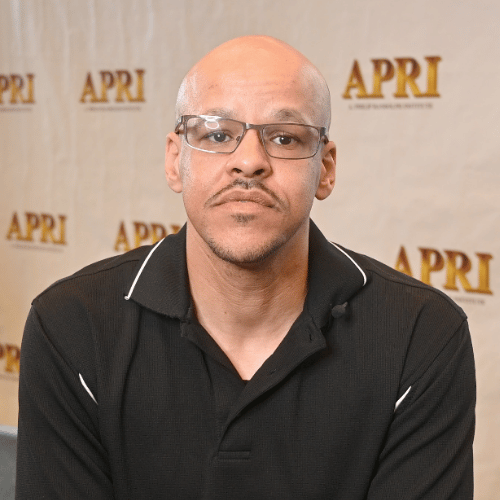
I’m Anthony Jason Dressel, and I’m a graduate of APRI’s Breaking the Chains of Poverty program. Looking back, I can say it plainly: getting into that program was a turning point for me.
When I first showed up, I wasn’t sure what to expect. I didn’t walk in with everything figured out—I walked in because I knew I needed a real change. I needed something stable, something structured, something that could help me steady myself, build skills, and move toward a career path that actually felt possible.
Pretty quickly, I realized this wasn’t just a class. It was support. It was practical learning. It was people showing up consistently and encouraging me when I didn’t have much confidence left to work with. The staff helped with everything. I mean that. There were moments I felt stuck or overwhelmed, and instead of getting brushed off, I had people who would slow down, explain things again, and help me move forward. The pace of the program mattered too. It wasn’t about pretending I could fix my whole life overnight—it helped me understand progress as something I could measure. Small steps. Taken seriously. Adding up.
One of the biggest milestones for me might sound small to somebody else, but it still stands out as one of the proudest things I’ve done. At 39 years old, I earned my learner’s permit. For me, that wasn’t just a card or a test passed, that was proof that I could follow through on a goal. It was independence. It was momentum. It felt like doors were opening that had been closed for years, because transportation isn’t just transportation—it’s work opportunities, it’s reliability, it’s being able to show up for yourself and for a job.
I’m not shy about the fact that I’ve had a dark past. I’ve been in places mentally and emotionally where I couldn’t see much beyond the next problem. But through the program, I started seeing a brighter direction, and I started believing it could actually be mine. Part of that shift came from being exposed to real worksites—union sites—and hands-on learning experiences that made the trades feel real, not just like an idea people talk about. Seeing what the work looks like in practice helped me picture myself in that environment. It helped me believe I could belong there.
Now when I talk about the future, I’m not talking in vague “someday” language. My next steps are practical. Once I get my driver’s license and a vehicle, I plan to pursue carpentry training. I also know sheet metal is a favorite of mine, and I’m still exploring what trade fits me best—what matches my interests and strengths. That’s one of the things the program gave me that I didn’t expect: it didn’t just point me to one option. It helped me understand I have options.
And honestly, one of the most unexpected things that impacted me was math. I know how that sounds, but it’s true. Math brought light into my life. Before the program, I felt limited—like I could function like a simple calculator, but anything beyond that felt out of reach. Then, through the program, fractions and percentages started making sense. That change wasn’t just about numbers. It was about confidence. It was about problem-solving. It was about realizing I could learn things that used to intimidate me.
Another thing I’ll always remember is that the program wasn’t all pressure and seriousness. We had moments that kept things human. One standout memory for me is the CAHOOTS test game. It was friendly competition, a lot of fun, and it made learning feel like something I could stay engaged with. Those moments mattered because they helped me feel like I wasn’t doing this alone—like I was part of something, more like a team than a classroom.
What surprises me most is how quickly things can change when you have structure and support. Nine weeks earlier, I had been denied by a temp agency. That hit me hard at the time. But then I look at where I am now: I’m taking baby steps, staying on track, and actually moving forward. I’m not going to sit here and say everything is solved, because it isn’t. But consistency is a victory, and for me, that’s real.
If I’m talking to someone who feels confused, or feels like they need to get their life together, I’ll say what I mean directly: look into APRI in Pittsburgh. This program has a way of turning question marks into exclamation marks. It replaces uncertainty with a plan. It replaces isolation with guidance. And if you earn that letter, if you get that opportunity, take advantage of it. It’s very good. And in my experience, when you step into this program, you have a friend for life.